

The development of routers in recent years has been a revolutionary one. This change is brought about by the incorporation of advanced software development services, where the routers are not only smarter but also faster. Routers are becoming smart devices with technologies such as software-defined networking, AI, and custom firmware code development to accommodate and optimize network performance on demand. This piece discusses how software development services that support the emergence of smart routers, as well as enhance router performance, are creating new opportunities for both businesses and consumers in the continuously expanding field of intelligent networking.
Software Development Services That Facilitate A Transformation Of Smart Routers
The routers do not need to be confined to routing packets of data; with software development services, it has been seen that intelligent networking solutions are now built in, and they improve the entire experience. Using advanced software layers, modern routers are able to dynamically change their behavior depending on real-time traffic information, user behavior, and network load.
The fundamental development in these directions is a move towards software-defined routers (SDRs). Older routers use hardware configurations and protocols to control the routing of data, whereas the software-defined routers separate network control to a centralized service, and therefore, the network control can be significantly more flexible and controllable. Router software development enables these devices to introduce features such as prioritization of traffic, automatic load balancing, as well as intelligent fault management without having to be operated manually.
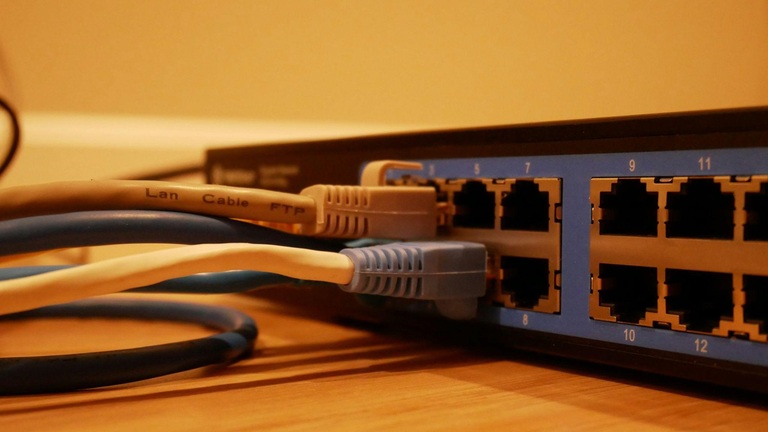
Among the main factors promoting such improvements is the growing popularity of AI-driven routers. Machine learning algorithms enable routers to anticipate traffic behavior, identify traffic anomalies, and even set configurations in real-time to achieve the best possible speed and minimum latency. Software development services are not only improving the router functionality but also making them future-proof when it comes to their use in future technological requirements.
Moreover, software development companies that provide custom software enhancement allow the creation of highly specialized features that are specific to a given application. It could be a router that can support the large traffic in a data center, or a router that can be configured to be a home router with advanced parental controls. The flexibility in firmware makes it possible to customize routers to suit specific needs.
The combination of these advanced features in Redwerk, a leading company in the field of custom software development, is achieved through their knowledge in software engineering. The firm was founded in 2005 and today boasts of more than 250 successful projects, and has provided software used by more than 773 million end users worldwide. Most custom software development firms like the aforementioned are now full-life cycle partners where they handle all the business analysis and architecture, UI/UX design, QA testing and delivery, as well as maintenance. Such vendors are usually dealing with customers throughout the US and EU and other areas of operation in industries such as e-government, media, and IoT, assisting router and network-centric systems with next-generation capabilities.
Router Performance Improvement: The Way Software Development Is Making Them More Efficient
Any router aims to offer the data in the most efficient and expedited manner. Nonetheless, in an environment where networks are increasingly becoming more complex, router performance improvement happens not only through faster hardware but also by more sophisticated software. A router needs new software that will be able to maximize the use of traffic flow, decrease bottlenecks and enhance the entire system’s resiliency.
Network optimization is one of the most important aspects by which software development services are enhancing router performance. Based on algorithms, such solutions enable routers to optimize bandwidth, give priority to important traffic, and reduce the loss of packets. This is essential in order to guarantee high-performance applications, which may require low-latency and uninterrupted service, including video streaming or online gaming.
Machine learning models can be used to constantly monitor and optimize the network behavior with AI-powered routers. One instance is that routers can be programmed to change their settings depending on the time of the day or change with the entry of a new device in the network. This is an intelligent networking solution that allows routers to actively control network resources as opposed to the router waiting until the network gets congested.
Moreover, there is the practice of custom firmware development whereby manufacturers tailor routers to a particular purpose, enhancing the speed as well as reliability of the routers. As an illustration, firmware can be customized such that a process of importance to business-related applications is always prioritized above less significant traffic. Such customization is critical in a place where performance is paramount, like the enterprise-level network or an advanced home setup.
Software-Defined Routers and the Effect on the Management of Networks
SDRs have become a paradigm shift in the management of networks. Software-defined routers are also dynamic and flexible, unlike traditional routers that operate on predetermined rules that are hard-coded in hardware and thus suited to dynamic environments. This dynamism enables network administrators to make routing decisions smoothly and enhances network agility and efficiency.
Software-defined networking (SDN) releases routers from the confines of the hardware. Such a transition allows routers to exploit software that manages traffic more efficiently, depending on the real-time state, such as routing traffic more efficiently, preventing bottlenecks, and distributing workloads among many paths.
In the case of businesses, this means quicker deployments and a more scaled network structure. Routers that are made using software are easier to revise and alter, and thus the management of the network is less difficult and more in tune with the changing demands. With the assistance of SDN, enterprises are able to perform automated provisioning and automatically configure routers; in addition, it simplifies operations and eliminates the necessity of manual intervention.
The Future Of Router Software Development: AI and More
In the future, AI-powered routers will become the next game-changer as routers will be even smarter and efficient. As the Internet of Things (IoT) continues to expand and the need for high-speed internet increases, routers should be capable of supporting additional devices and more intricate traffic models. AI should enable routers to predict traffic spikes, identify problems that could happen and automatically change settings to maximize performance.
AI can even enable routers to communicate with other intelligent devices in the house or office, to create a smooth network experience in the next few years. For instance, a router might adapt its configurations to the tastes of the user, give priority to specific devices or applications or even cooperate with other smart home technologies to produce a more customized environment.
Also, the development of software-defined routers and smart networks will persist, as more sophisticated algorithms will allow them to become even more automated and in control concerning network maintenance. The collaboration between AI, SDN and the development of specific firmware will be the evolutionary step to the new generation of routers that will be faster, safer, and more adjustable to the demands of both users and companies.
Conclusion
The transformation of router technology is being fueled by software development services that are making the tech smarter, faster and more efficient. These services are assisting routers to keep up with the ever-increasing needs of the contemporary networks with advancements such as software-defined routers and AI-driven solutions, and custom firmware development. Through such innovations, businesses and consumers will have the privilege of having faster, more stable internet connection, higher security and more control of their network.