
If you’re a student who uses research paper writer AI tools, be ready to face a great variety of cybersecurity threats that could hinder your academic journey. According to a recent study, 82% of academic institutions experienced cyberattacks in 2026 – with ransomware attacks increasing 70% year-over-year. These threats especially target students who rely on artificial intelligence tools for research, brainstorming, and writing. And the consequences? They extend far beyond simple data loss.
Sadly, the stakes couldn’t be higher. When cybersecurity failures occur, the aftermath is horrible: corrupted research data, stolen intellectual property, academic integrity violations, and even federal funding suspensions. For students navigating an academic landscape, more digital by the day, understanding these risks while leveraging tools like research paper writer AI safely has become essential to academic success.
The reality is harsh: academic institutions face over one data breach per week on average – making students primary targets for attacks. Yet, with proper security practices and careful tool selection, you can make use of AI writing assistance and, at the same time, protect your valuable research and maintain academic integrity.
Academic Institutions Under Siege From Cybercriminals
The cybersecurity landscape for academic research has fallen apart pretty quickly. Universities now deal with 75% more cyberattacks than just two years ago, with education being the most targeted sector for ransomware operations. These numbers paint a grim picture of institutional vulnerability.
New York University’s March 2026 cyberattack shows the scale of current threats. Hackers compromised personal data for over 3 million applicants, exposing names, test scores, GPAs, and financial aid records dating back to 1989. The attack lasted only 2-3 hours but triggered 10 class-action lawsuits and ongoing federal investigations.
The financial impact is shocking, too: educational data breaches now cost an average of $4.02 million per incident for higher education institutions, nearly quadruple the 2026 average. Columbia University, Texas Tech, and many other institutions have faced multi-day shutdowns, cancelled classes, and corrupted research databases.
Students bear the brunt of these attacks. A study from the Center for Internet Security shows that 90% of academic breaches begin with email attacks targeting student and faculty credentials. Once inside university networks, hackers access research data, grade systems, and financial records with disastrous consequences.
What’s more, the threats are quickly evolving. Nation-state actors from China, North Korea, and Iran specifically target academic research, seeking intellectual property and sensitive research data. Meanwhile, ransomware groups demand average payments of $608,000 from universities, often targeting mid-semester periods for maximum chaos.
Research Paper Writer AI Tools – New Ways For an Attack
Students increasingly rely on research paper writer AI platforms for academic assistance. However, these tools introduce serious security vulnerabilities. Most AI writing platforms retain your inputs indefinitely and use submitted content to train their models, which means your academic work becomes permanently stuck in commercial databases.
The risks are compounding. OpenAI has experienced over 1,140 security breaches. That includes incidents exposing chat histories and payment information for 1.2 million users. DeepSeek’s 2026 data leak exposed an unprotected database containing over one million log entries of user interactions with no authentication protection whatsoever.
If you upload research drafts, thesis chapters, or proprietary data to unsecured AI platforms, you essentially publish your work publicly. Samsung is one exemplary case: they banned generative AI tools company-wide after employees accidentally leaked confidential information, demonstrating how easily sensitive content can be exposed.
The privacy policy landscape offers little protection. A look into it shows that AI platform privacy policies consistently fail GDPR requirements, lack specificity about data collection practices, and overall provide vague language about third-party data sharing. MIT’s guidance emphasizes that “information shared with generative AI tools using default settings is not private and could expose proprietary or sensitive information to unauthorized parties.”
Research paper writer AI detection tools aggravate these problems. Cornell University research shows current AI detection algorithms achieve only 33-81% accuracy while demonstrating significant bias against non-native English speakers, creating false academic integrity violations that can destroy students’ careers.
Building A Security For Academic Workflows
We recommend that students stick to comprehensive security practices to protect their research and academic work. The foundation starts with identity protection: you should use unique passwords of at least 16 characters for every account, enable multi-factor authentication when possible, and employ trustworthy password managers to generate and store credentials securely.
Device security calls for constant caution. Always lock devices when stepping away, regardless of location. Install and maintain updated antivirus software, enable automatic security updates, and never leave devices unattended in public spaces. Additionally, you can store sensitive research data only on encrypted devices with institutional backup options.
Network security proves critical as well. Avoid public WiFi networks for any academic work and use VPN services approved by your institution when accessing university resources remotely. Verify network authenticity by checking names with IT services before connecting.
The 3-2-1 backup rule for essential data protection is the following:
- 3 copies: Original working file + 2 backup copies.
- 2 different storage media: Local device + cloud storage.
- 1 offsite copy: University-approved cloud storage or geographically separate location.
Implementation means maintaining working files on your primary computer, local backups on encrypted external drives stored separately, and remote backups through university OneDrive or Google Drive for Education accounts.
Collaboration security demands institutional tools. We recommend prioritizing Microsoft Teams, Google Workspace for Education, and university-provided platforms that meet FERPA requirements and educational data privacy standards. Use “specific users only” sharing settings, never “anyone with the link” for academic data, and regularly review access permissions for former collaborators.
How to Evaluate Research Paper Writer AI Platforms
You should apply rigorous security criteria when selecting research paper writer AI tools for academic use. Start with institutional approval: check your university’s approved software list first and consult IT security offices before using new platforms.
Essential security features to require include:
- Multi-factor authentication and single sign-on integration
- End-to-end encryption for data transmission and storage
- Clear data retention and deletion policies with user control
- Granular access controls and activity logging
- Enterprise agreements preventing data from being used for model training
Red flags you must avoid immediately:
- Services without institutional or educational versions
- Platforms requiring personal social media accounts for access
- Tools with unclear privacy policies or data ownership terms
- Services without proper encryption or security certifications
- Platforms that monetize user data or serve targeted advertisements
University-approved alternatives offer superior protection. Microsoft Copilot enterprise versions provide data-protected access with guarantees that chat data isn’t shared or used for training. Another example – Google Workspace AI tools, which include enhanced privacy controls through educational licenses.
You should never input confidential information into any research paper writer AI platform, including personal identification numbers, proprietary research data, complete academic drafts before publication, or information covered by FERPA regulations. Treat all AI interactions as potentially public communications.
When permitted by instructors, document AI usage completely: specify the exact tool and version used, record all prompts submitted, detail how outputs were modified or verified, and assess the reliability and accuracy of the content you generated.
How Academic Integrity Meets Cybersecurity Compliance
Where cybersecurity and academic integrity cross paths, it creates complex compliance requirements. As a student, you need to understand federal regulations like Family Educational Rights and Privacy Act (FERPA), which keeps educational records private, and General Data Protection Regulation (GDPR) requirements when collecting international data or participating in European projects.
AI policies vary from university to university. For example, Cornell requires clear syllabus communication of expectations and standard citation formats for any AI assistance. Carnegie Mellon, on the other hand, uses a range from complete prohibition to encouraged use with attribution. The University of Kansas emphasizes authentic assessment design rather than relying on unreliable detection tools.
Research security violations can have severe consequences: government-wide debarment from federal funding lasting 3-5 years, loss of university employment, permanent exclusion from reviewer roles, and potential criminal prosecution for conspiracy or false statements.
NSF’s new research security framework requires institutions receiving over $50 million annually to establish comprehensive security programs by January 2027. Students will then have to complete mandatory training covering disclosure requirements, risk management, and international collaboration guidelines.
Foreign collaboration requires special attention. You must understand disclosure requirements for international partnerships, maintain transparency in all research relationships, and follow institutional risk assessment procedures for collaborating with researchers from countries of concern.
How Data Governance Frameworks Shape Secure Research Environments
Universities are rapidly implementing comprehensive data governance programs to address cybersecurity risks while supporting academic innovation. Data governance in higher educational institutions refers to the management and stewardship of data across various domains of academia and administration, encompassing principles, policies, and practices that guide how data is obtained, handled, used, and protected. These frameworks prove essential for students navigating complex research workflows.
Even so, the scope of institutional oversight continues expanding. We recommend that universities ensure strategic use, management, and reporting of University Data through governance programs that manage quality, consistency, usability, accessibility, availability, and protection throughout the data lifecycles. For students using research paper writer AI tools, this means institutional policies now directly impact tool selection and usage patterns.
Compliance requirements create both challenges and opportunities for student researchers. Universities maintain extensive domain networks averaging 244 domains for the top 1,500 institutions, with the top 500 universities managing 616 domains and the top 100 institutions handling 1,580 domains each. This sprawling digital infrastructure creates numerous entry points for cyberattacks, making institutional security policies more critical than ever. As a student, you will certainly benefit from these comprehensive security measures but must adapt your research practices accordingly.
Institutional Security Infrastructure Determines Student Safety
The physical reality of university cybersecurity shows why students need powerful personal protection strategies. 10% of universities maintain open Remote Desktop Protocol ports, providing attackers with initial footholds that allowed 70-80% of data breaches to happen in 2020, according to FBI analysis. These vulnerabilities directly threaten student research data stored within institutional networks.
Universities struggle with fundamental security maintenance challenges that impact student work environments. Analysis shows that 45% of universities operate at least one asset running end-of-life PHP versions, with top 500 universities averaging 30 domains using outdated software lacking security updates. If you rely on institutional resources, you must understand these limitations and implement additional protective measures on your end for any AI interactions.
The scale of institutional data governance creates complex compliance environments. Universities classify institutional data according to legal, regulatory, administrative, and contractual requirements while balancing intellectual property considerations and operational use requirements. For students, this means understanding multiple overlapping security frameworks when selecting and using research paper writer AI platforms for academic projects.
Your Security Roadmap
We recommend doing the following:
Week 1 – Immediate Actions
- Make sure 2FA is enabled on all your academic accounts
- Install and configure a password manager
- Update all your passwords to unique 16+ character combinations
- Enable automatic system updates on all devices you have
- Review and clean up existing file sharing permissions
Month 1 – Comprehensive Setup
- Establish a 3-2-1 backup system for all research data
- Complete institutional cybersecurity training requirements
- Audit your digital tools against security compliance standards
- Create formal data management plans for current research projects
- Establish secure collaboration protocols with all team members (if any)
Ongoing security practices require you to review the access permissions and shared files monthly, conduct a backup verification and restoration testing quarterly, and test your security tool effectiveness annually, while staying updated on institutional policy changes, and participating in cybersecurity awareness programs.
Emergency response procedures prove critical.
- For data breaches, you need to disconnect affected systems immediately, report to university IT security within 2 hours, document incident details within 24 hours, and cooperate fully with institutional investigations.
- For device loss or theft, you must report immediately to university security and law enforcement, change all passwords accessed from the device, request remote data wiping if possible, and revoke access to all shared files and systems.
Secure Academic Future Comes With Smart Choices
The cybersecurity threats will most likely continue evolving – after all, there’s no other way as academic institutions digitize operations and students increasingly rely on AI-powered tools. Success requires you to balance innovation with security and leverage powerful research paper writer AI capabilities while maintaining rigorous data protection standards.
Students who implement comprehensive security practices now position themselves for successful research careers while protecting the valuable data that drives scientific advancement. The investment in proper cybersecurity isn’t just about individual protection – it contributes to the broader integrity and trustworthiness of the entire academic world.
If you’re seeking secure AI writing assistance, Litero AI provides enterprise-grade security features specifically designed for academic use. Unlike public AI platforms that retain and monetize user data, Litero implements end-to-end encryption, institutional data governance, and clear privacy protections that prevent academic work from being used either for model training or commercial purposes.
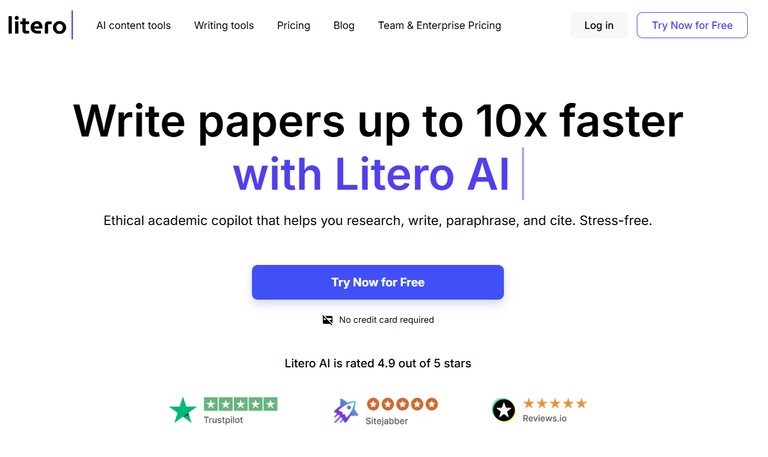
Litero AI’s secure collaboration tools enable research teams to work together safely while maintaining complete control over their intellectual property. With granular access controls, audit trails, and integration with university authentication systems, you can make use of powerful AI assistance while meeting institutional cybersecurity requirements and maintaining academic integrity standards throughout their research workflows.